
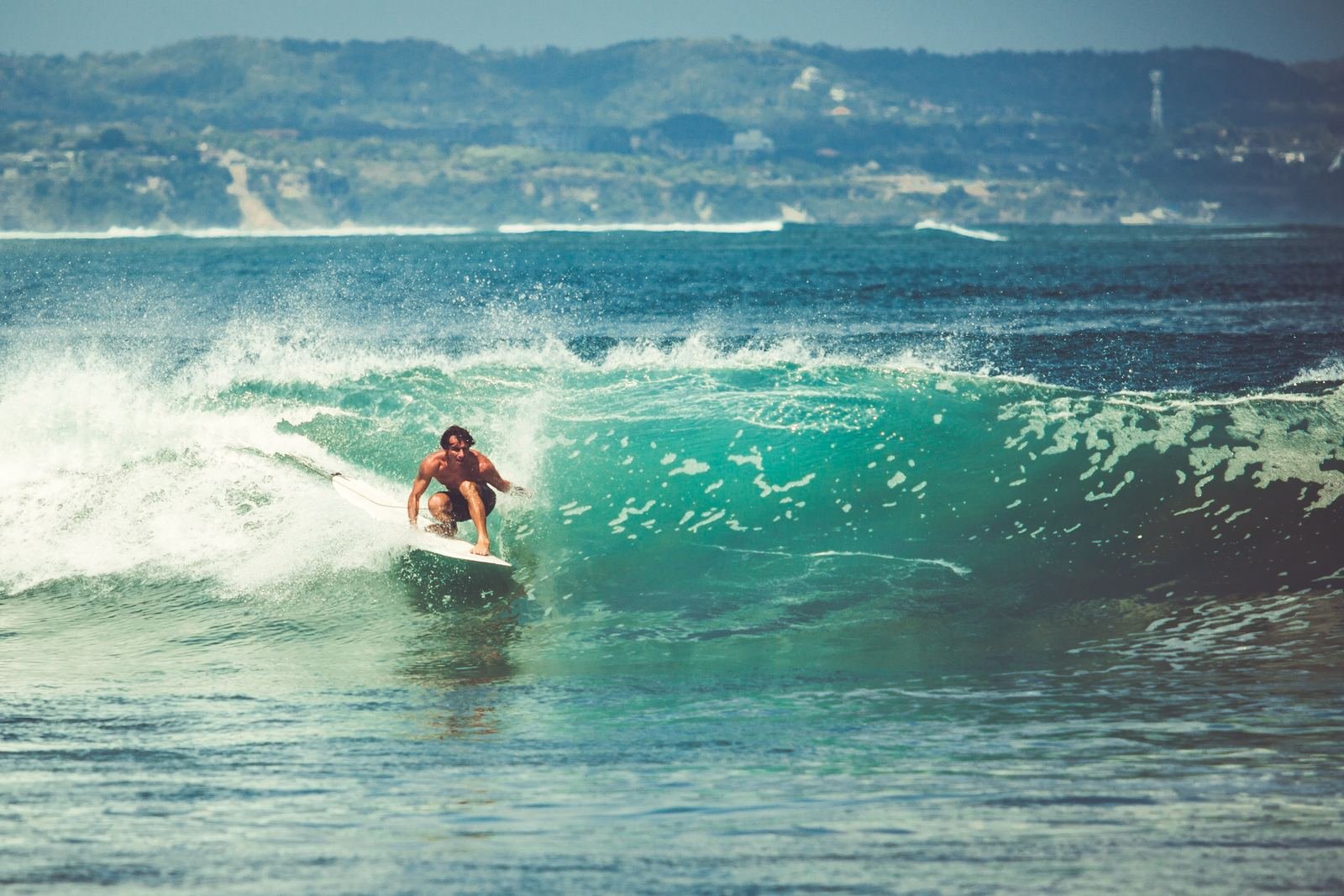
This stretch of the Silver Coast has more good waves in a short drive than almost anywhere in Europe. That is why the surf world turns up here. But the spots each want different things from the swell, the wind and the tide, and they each suit a different kind of surfer. Turn up on the wrong day at the wrong spot and you will wonder what the fuss is about. Read them right and you can find something worth surfing on most swells of the year.
Here is how the local waves actually work, north to south, from someone who has been surfing them a long time.
Nazaré
Start at the top of the coast, and start with the giant. Nazaré is the most famous surf spot in the world now, and for one reason: Praia do Norte produces the biggest waves ever ridden. There is a deep underwater canyon running in towards the headland that funnels and stacks the Atlantic swell, so when a big system arrives the waves here grow to a size that does not happen anywhere else. On the right winter day you can stand on the cliff by the lighthouse and watch walls of water the height of a building, with surfers towed in behind jet skis. It is worth the drive just to see it, even if you never intend to paddle out.
Be clear about what it is, though. Big Nazaré is not a surf, it is an expedition, tow teams, safety skis, years of preparation and a real chance of drowning. It is not somewhere you rock up and try. That side of the wave is for a tiny handful of specialists, and pretending otherwise gets people killed.
But there is another Nazaré. The town beach, Praia da Nazaré, tucked in the bay, is a normal, surfable beach break on the smaller, cleaner days, sheltered from the worst of it. When Praia do Norte is a monster, the beach in the bay can be perfectly rideable and a good deal of fun. So the honest picture is two waves in one place: a spectacle almost no one should surf, and a friendly beach break most people can. Know which one you are looking at before you go near the water.
On the manageable days in the bay, a fish or a mid length that catches waves easily makes the most of it. Leave the big-wave dreams to the canyon.
Foz do Arelho
Home water. A long, open beach break sitting beside the mouth of the Óbidos lagoon, exposed to plenty of Atlantic swell with room to spread out. It is a proper beach break, which means the sandbanks move and the peaks shift, so it rewards the surfer who looks before they paddle out rather than the one who runs straight in.
It comes alive on a west swell with an offshore wind from the east or southeast, and it is usually best around mid tide. When it is on it can be fast and powerful, with rights and lefts off the peaks. Quiet through the week, busier at weekends. Good for improvers through to strong surfers, and forgiving enough to be fun when it is small.
Board wise, a beach break like this favours something with a bit of life in it. A fish or a hybrid for the smaller, fuller days, a shortboard when it has some size and shape.
Peniche and Supertubos
Down the coast, Peniche is a peninsula that faces the swell from more than one direction at once, which is its magic. When one side is blown out, you drive five minutes and the other side is clean. That single fact makes it one of the most reliable places to surf in the country.
Supertubos is the famous one, the barrelling beach break that the world tour visits. It is fast, hollow and heavy, breaking hard over shallow sand, and it does not suffer fools. Beautiful to watch, humbling to surf, and firmly for confident, experienced surfers who know how to sit in a barrel and take a beating. If that is you, bring a board with drive and hold, a step up or a solid shortboard.
The rest of the peninsula spreads the load. There are gentler options for the days Supertubos is too much, and plenty of quality in between.
Baleal and Ferrel
Just north of Peniche, Baleal is the friendly heart of the region. A small island joined to the mainland by a sandy causeway, with beaches on both sides catching swell and shelter from opposite directions. This is where most people learn, and for good reason. The waves are more forgiving, the beaches are beautiful, and there is nearly always somewhere rideable.
Beginners and improvers are well served here, and even strong surfers get plenty of fun days when the peaks line up. Around Ferrel there are more exposed, punchier options for when you want a bit more. For Baleal on an average day, more foam and more forgiveness is the smart call, a mid length or a fuller hybrid rather than a low volume sled.
Reading the coast as a whole
The trick with this coast is to treat it as one system, not a list of spots. The swell that closes out Foz might be perfect at a sheltered corner of Peniche. The wind that ruins one side of the peninsula grooms the other. Learn which spot wants which conditions and you stop chasing and start choosing.
That is also why a quiver here earns its keep. A board for the small, fun days, and a board for when it has size and shape, covers most of what this coast throws at you.
Check the forecast on the swell tracker, and if you want a board built for these exact waves rather than a generic one, that is what we do here. We surf them too.
FAQ
Where is the best surfing near Foz do Arelho? Foz do Arelho itself is a strong beach break, and it sits within easy reach of Nazaré to the north and Peniche, Supertubos and Baleal to the south. Together they cover everything from gentle learning waves to world class barrels and the biggest waves on earth.
Can I surf Nazaré? There are two Nazaré waves. Praia do Norte produces the biggest waves ever ridden and is strictly for a small number of big-wave specialists using tow-in teams and safety cover. The town beach in the bay, Praia da Nazaré, is a normal surfable beach break on smaller, cleaner days and is fine for regular surfers. Always be sure which one you are looking at before entering the water.
Why are the waves at Nazaré so big? A deep underwater canyon runs in towards the Nazaré headland and funnels and stacks incoming Atlantic swell, so on big winter systems the waves grow far larger than anywhere else on the coast. It is why Praia do Norte holds world records for the largest waves surfed.
What are the best conditions for surfing Foz do Arelho? Foz do Arelho works best on a west swell with an offshore wind from the east or southeast, usually around mid tide. It is an exposed, powerful beach break, quieter midweek and busier at weekends.
Is Peniche good for beginners? Peniche itself, and especially Supertubos, is best for experienced surfers. Beginners are much better served at nearby Baleal, where the waves are more forgiving and there is nearly always a rideable, friendly option.
What is Supertubos like to surf? Supertubos is a fast, hollow, heavy beach break that hosts world tour events. It breaks hard over shallow sand and is suited to confident, experienced surfers comfortable with barrels and heavy waves.
What surfboard should I ride on the Silver Coast? It depends on the day and the spot. A fish or hybrid suits smaller, fuller beach break days, a shortboard or step up suits size and power, and a mid length is a good all rounder for the gentler waves around Baleal. A board shaped for these specific waves will always feel better than a generic one.
Can I get a board shaped for these local waves? Yes. Watta boards are hand shaped on this coast by a surfer who rides these breaks, so a custom board can be built around your local conditions rather than a general template.